Description
Are you tired of the same old political rhetoric?
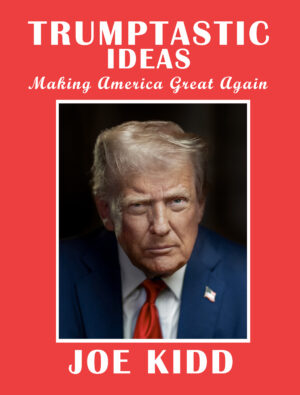
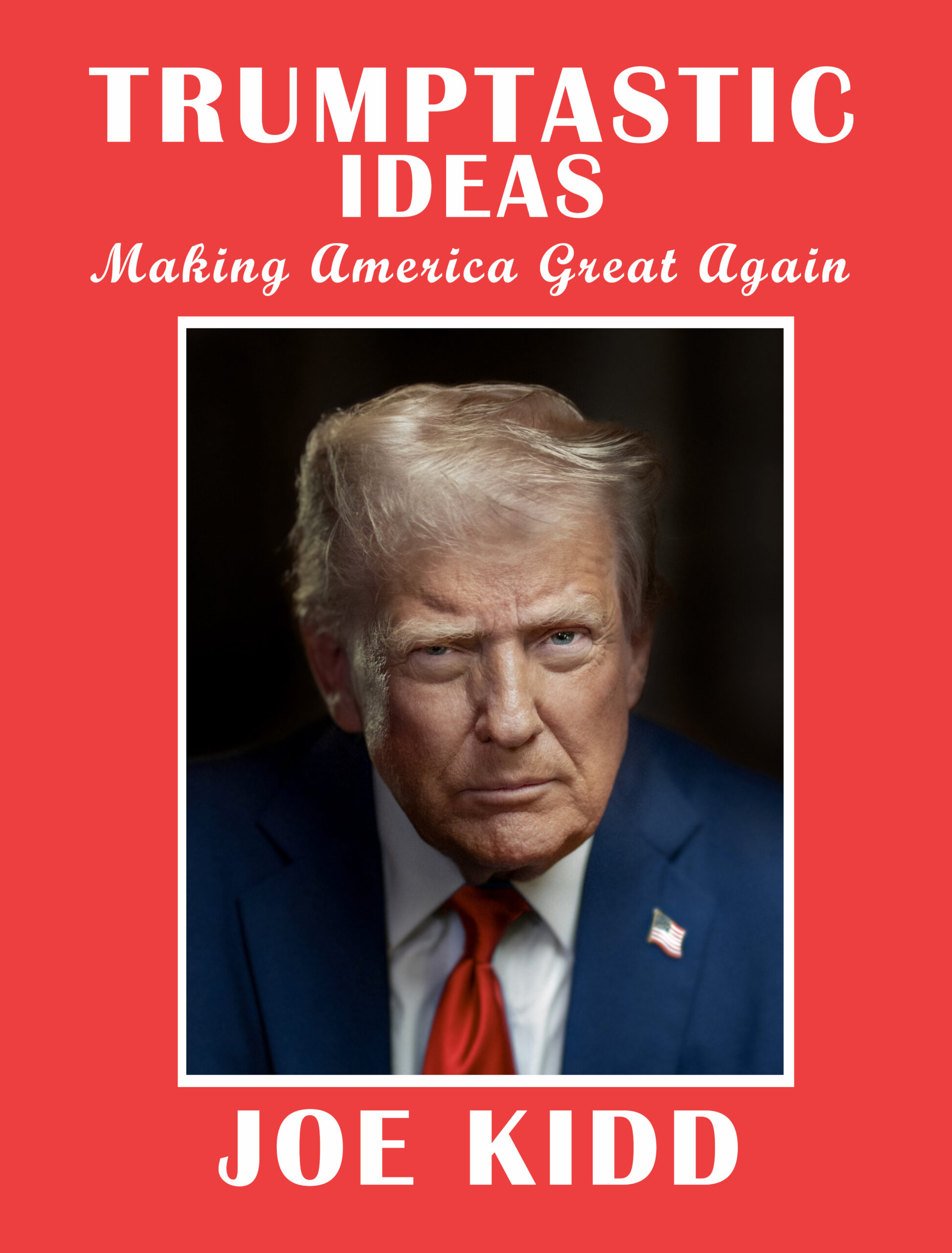
Joe Kidd presents Trumptastic Ideas, a bold vision for Making America Great Again. This isn’t your typical political analysis. Kidd dives headfirst into controversial solutions, challenging the status quo and questioning long-held beliefs.
From reforming healthcare to securing our borders, no topic is off-limits. But can these radical ideas gain traction in a deeply divided nation? Will they truly benefit all Americans, or create new divisions?
Prepare to have your assumptions challenged and your political allegiances tested.
Is America ready for a dose of Trumptastic Ideas?
Joe Kidd’s Trumptastic Ideas: Making America Great Again delivers a fervent blueprint for conservative governance in President Trump’s second term. Self-published in 2025, the book compiles policy proposals rooted in originalist constitutionalism and anti-establishment zeal.
Joe Kidd positions himself as a lifelong conservative predating the MAGA era, claiming over 60 years of advocacy for “America First” principles. He portrays a near-ideological kinship with Trump, joking that if nine years older, Trump could be his twin, underscoring lockstep alignment on policy. Kidd’s website, joe-kidd.com, suggests prior writing, though specifics remain elusive; the book lists “Also, by Joe Kidd,” implying a body of work, yet it focuses on this as his Trump-centric manifesto.
Kidd writes from deep frustration with Washington’s “do-nothing Congress” and the “swamp,” dedicating the volume solely to Trump’s reelection. His voice blends polemic with granular reform ideas, urging readers to distribute the PDF via a QR code to lawmakers across the aisle.
Core Themes
Kidd champions majoritarian rule, railing against the Senate’s 60-vote filibuster as anti-democratic, granting minorities “3 votes to every 2” of the majority. He invokes “nuclear option” history—from 2013, when Reid set 51-vote thresholds for most bills, to 2017, when McConnell set 67-vote thresholds for debt-adding spending.
Bureaucratic slashing dominates, codifying DOGE (Department of Government Efficiency) cuts to agencies like EPA, NIH, and the Peace Corps, which are deemed unconstitutional under Article I, Section 8. Lists run into the hundreds, promising trillions saved by axing “swamp” overhead.
Senate Reform
Chapter 1 demands “going nuclear” to kill the 60-vote rule, detailing thresholds: 51 for recess appointments, nominations (except Supreme Court at 60), ordinary bills; 67 for treaties, debt hikes. Kidd argues this restores founders’ “one man, one vote,” blaming the filibuster for stalling Trump’s mandate.
He chronicles cloture evolution—1917 Rule XXII, 1975 drop to 60 votes, nuclear precedents—pros (responsiveness) vs. cons (volatility), citing Brookings and CRS. Solution: modified rule ends “log jam,” enabling recess appointments.
Judicial Overhaul
Chapter 2 repeals the inferior courts and the 1789 Judiciary Act, establishing a new D.C.-based Federal Circuit (4-year terms) to handle nationwide injunctions and inter-branch suits. District courts are limited to diversity and civil rights cases; lifetime appeals courts stay regional.
Kidd decries “judge shopping,” single-judge blocks without hearings, and urges Congress: “What the Congress giveth, the Congress can taketh away.” Cites Article III basics, bemoans “District Court judges… not GODS.”
Bureaucracy Purge
Chapter 3 mandates DOGE codification, listing 500+ agencies—”DOGE it”—from AmeriCorps to the Smithsonian, violating the 10th Amendment or Article I. Reorganizes into leaner departments (e.g., Defense slims commands), and claims half of federal spending is overhead.
Election Integrity
Chapter 5 sets “National Election Day” (first Tuesday post-first Monday, even years) for federal races only—no states piggybacking. In-person/paper ballots, mail absentee pre-day; federal reimburses $11/capita. Ends “concurrent” costs, boosts uniformity.
Chapter 6 pushes Real ID as a national ID for voting/federal access, bypassing delays via “carrot/stick” (sunset benefits sans ID). Emergency fast-track possible.
Immigration Stance
Chapter 7 rejects birthright citizenship for illegals’ kids, tracing the 1790 Nationality Act’s residency oaths to the 1866 Civil Rights Act (“not subject to foreign power”). 14th Amendment declaratory thereof; Wong Kim Ark irrelevant (legal residents). Cites Trumbull: “not owing allegiance to anybody else.”
Elk v. Wilkins (Indians owed tribal allegiance) precedent; modern bureaucracy flipped after the 1950s. Urges SCOTUS reversal amid “mob pressure.”
Appointments Power
Chapter 8 revives recess appointments (Art. II, §2, cl.3), bypassing Senate pro forma sessions. “Every time the Senate leaves town, make appointments,” filling vacancies till the session end.
Healthcare Agenda
Chapters 9-11 target “swamp” in healthcare: waste/fraud analytics, ACA repeal. Tiered ER triage (NP for non-urgent, $175 vs. $1300); site-neutral payments save billions. Pathways: reinsurance, high-risk pools, underwriting restore—lessons from AHCA flop (CBO timing, provider opposition).